Teaching Handouts

Centering lived experience, shifting away from deficit-based models, and seeing disability as defined by relational and cultural constraints.
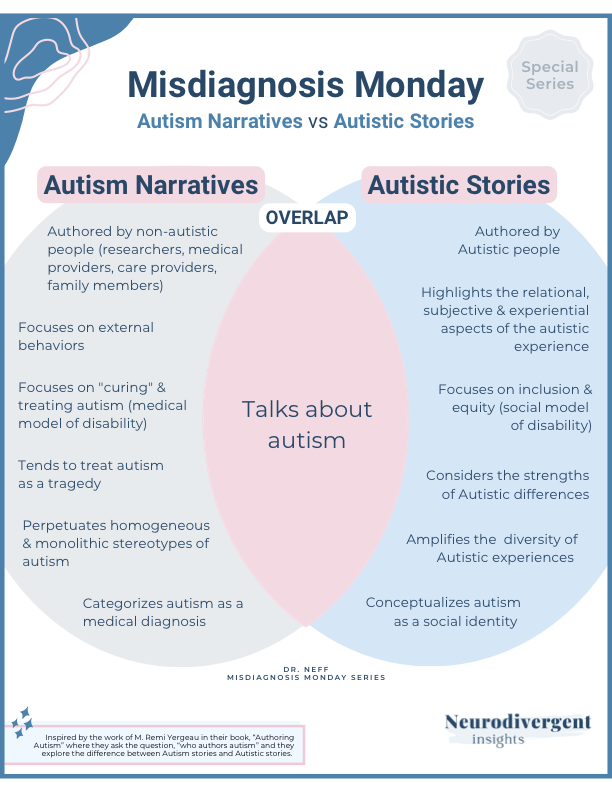
Venn diagram comparing autism narratives and autistic stories for Misdiagnosis Monday, part of the Neurodivergent Insights series. The diagram highlights overlaps and differences in authorship, focus, and perspective between the two.
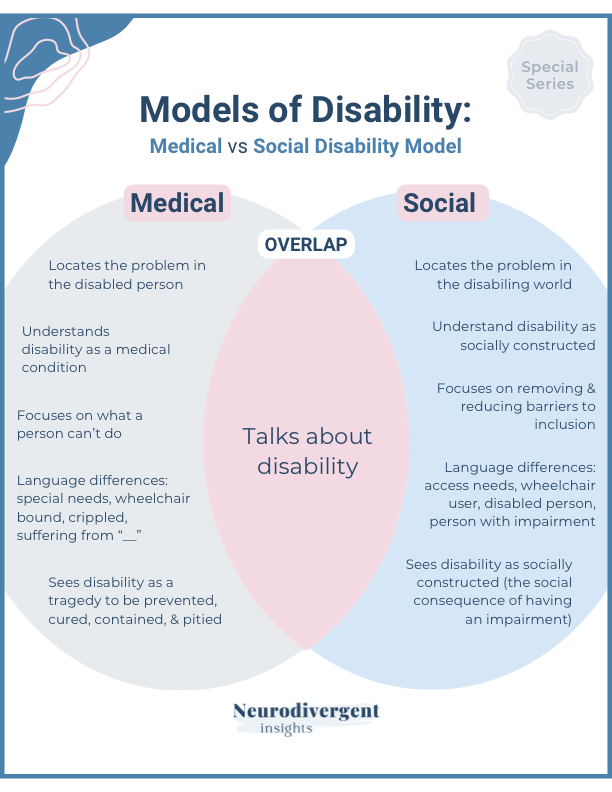
Comparison chart showing models of disability: medical model on the left, social model on the right, with overlapping area in the center. Both models discuss locating the problem, understanding disability, focus areas, language differences, and perspectives on disability. Title reads 'Models of Disability: Medical vs Social Disability Model', with a note indicating 'Special Series' in the top right corner.

Overlap and Common Patterns

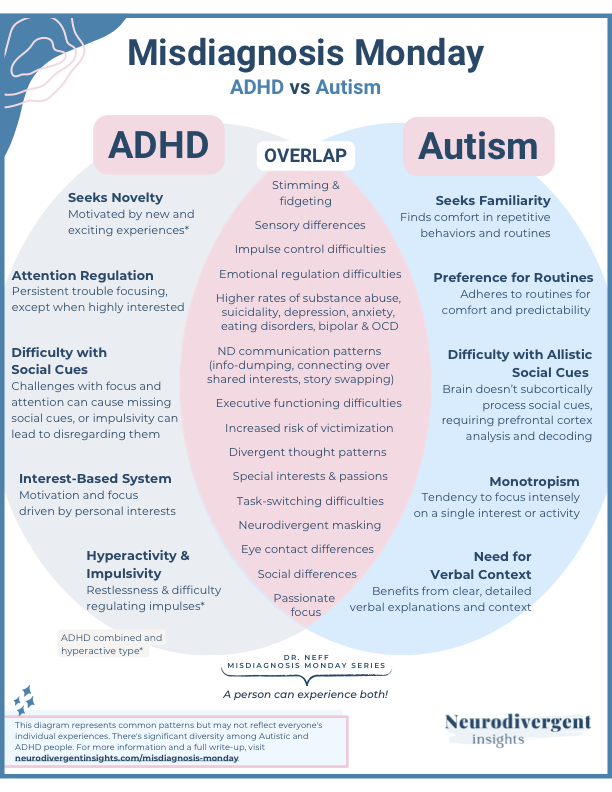
Diagram comparing ADHD and Autism on Misdiagnosis Monday, showing overlapping and distinct features such as attention regulation, social cues, emotional regulation, routine preference, and verbal expression.
A diagram comparing autistic traits and tendencies, highlighting differences and overlaps between non-stereotypical and stereotypical autism. The diagram features two sides with traits such as empathy, social behaviors, and interests, alongside a central overlap section detailing common characteristics like special interests and executive functioning difficulties. It is part of the Neurodivergent Insights series explaining autism misconceptions.

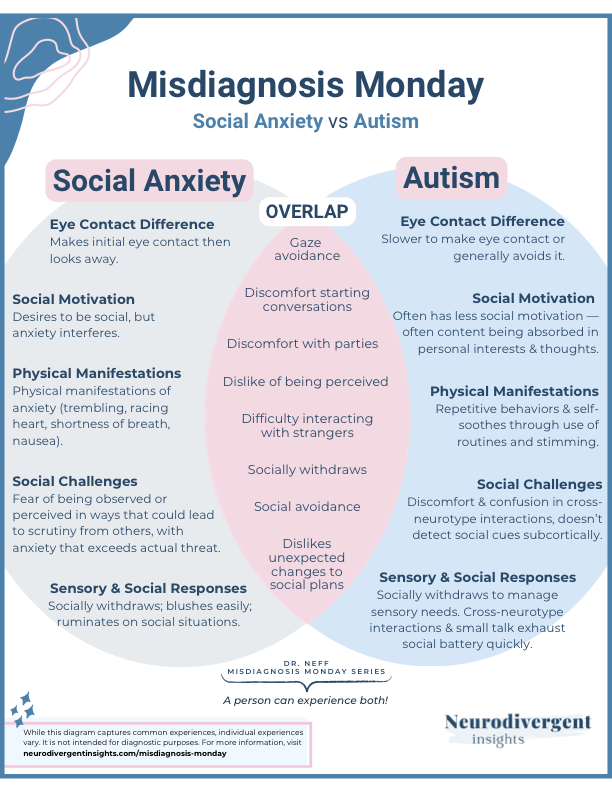
Highly relevant to therapeutic contexts that rely on eye contact and social markers
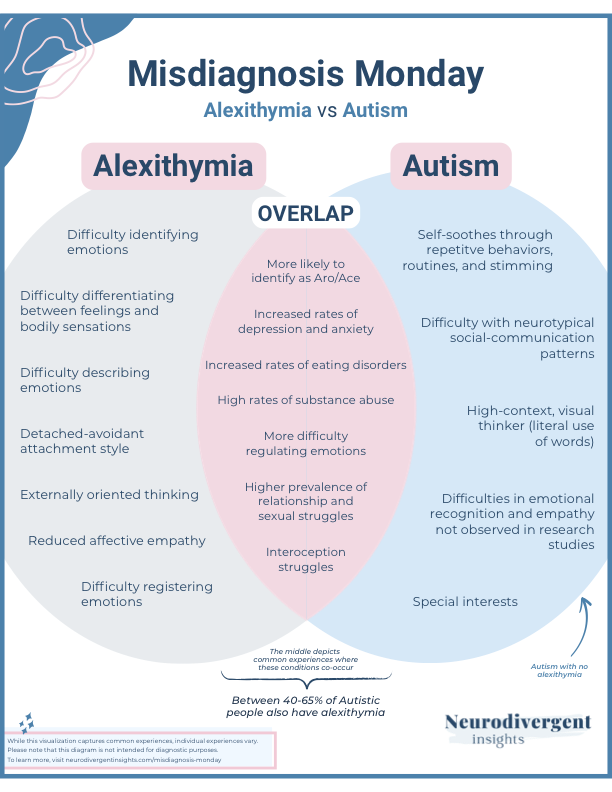
A Venn diagram comparing characteristics of Alexithymia and Autism, titled 'Misdiagnosis Monday.' The left circle lists traits of Alexithymia, the right circle lists traits of Autism, and the overlapping area shows common experiences. Key points include emotional identification challenges, difficulty with social communication, emotional regulation issues, and sensory sensitivities. The diagram notes that 40-65% of autistic people also have alexithymia and emphasizes the similarities and differences between the conditions.
A chart comparing social anxiety and autism diagnoses on symptoms like eye contact, social motivation, physical manifestations, social challenges, and sensory responses, with overlapping traits in a Venn diagram style.